l(2)37Cf, l(2)E60, lincRNA.S1565





acts during oogenesis where it interacts with Nos and Pum to suppress hunchback translation - a tumor suppressor that regulates proliferation in the brain - segregates into one daughter cell where it inhibits protein translation, preventing self-renewal and inducing differentiation - directs maternal mRNA clearance during the Drosophila maternal-to-zygotic transition
Please see the JBrowse view of Dmel\brat for information on other features
To submit a correction to a gene model please use the Contact FlyBase form
AlphaFold produces a per-residue confidence score (pLDDT) between 0 and 100. Some regions with low pLDDT may be unstructured in isolation.
Tissue-specific extension of 3' UTRs observed during later stages (FBrf0218523, FBrf0219848); all variants may not be annotated
Gene model reviewed during 5.48
Low-frequency RNA-Seq exon junction(s) not annotated.
Gene model reviewed during 5.45
Annotated transcripts do not represent all supported alternative splices within 5' UTR.
Multiple (sequential) stage-specific extensions of 3' UTRs observed during embryogenesis (FBrf0215804); all variants may not be annotated.
Gene model reviewed during 5.55
4.933 (longest cDNA)
1037 (aa)
Interacts with nanos (nos) and pum (PubMed:11274060). Acts via the formation of a quaternary complex composed of pum, nanos, brat and the 3'-UTR mRNA of hb (PubMed:11274060). Not recruited by nanos and pum to cyclin B 3'-UTR mRNA (PubMed:11274060). Might interact with mira; the interaction seems to be important for brat localization during mitosis (PubMed:16564014). Interacts with Ago1 (PubMed:18528333).
The NHL repeats form six-bladed beta-propeller that mediate the interaction with the pumilio repeats of pum, and are essential for translational effector function.
Click to get a list of regulatory features (enhancers, TFBS, etc.) and gene disruptions (point mutations, indels, etc.) within or overlapping Dmel\brat using the Feature Mapper tool.
The testis specificity index was calculated from modENCODE tissue expression data by Vedelek et al., 2018 to indicate the degree of testis enrichment compared to other tissues. Scores range from -2.52 (underrepresented) to 5.2 (very high testis bias).
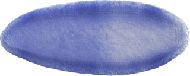
Comment: maternally deposited
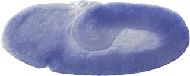
Comment: anlage in statu nascendi
Comment: anlage in statu nascendi
Comment: anlage in statu nascendi
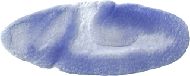
Comment: reported as procephalic ectoderm anlage in statu nascendi
Comment: reported as procephalic ectoderm anlage in statu nascendi
Comment: reported as procephalic ectoderm anlage in statu nascendi
Comment: reported as procephalic ectoderm anlage
Comment: reported as procephalic ectoderm anlage
Comment: reported as procephalic ectoderm anlage
Comment: reported as procephalic ectoderm anlage
Comment: reported as ventral nerve cord anlage
Comment: reported as procephalic ectoderm primordium
Comment: reported as procephalic ectoderm primordium
Comment: reported as procephalic ectoderm primordium
Comment: reported as procephalic ectoderm primordium
Comment: reported as procephalic ectoderm primordium
Comment: reported as procephalic ectoderm primordium
Comment: extended 3' UTR isoform
Comment: expression starts late in embryonic stage 12
Comment: expression starts late in embryonicstage 12
Comment: expression starts late in embryonic stage 12
brat transcripts are detected early and late in embryogenesis but transcripts containing the 3' UTR extension (~8.5 kb) are only detected at later stages and appear after the maternal-to-zygotic transition. Sequential, phased, 3' UTR lengthening is seen (3' UTR lengthening ocurring in multiple steps during later stages of embryogenesis). brat extended 3' UTR transcripts are expressed specifically in the nervous system.
brat expression is enriched in border follicle cells relative to other cells in the egg chamber.
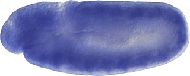
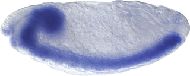
brat is expressed in the developing brain, the ventral CNS, and the PNS starting at stage 11. Expression is detected in the ganglion mother cells starting at stage 13. In stage 16 embryos, 4 clusters of peripheral neurons express brat. The lacZ reporter construct EcollacZbrat-k06028 shows additional staining in cardioblasts from stage 11 to 17, which was not detected by brat in situ hybridization. See EcollacZbrat-k06028RA for reporter construct expression, including expression in larval stages.
JBrowse - Visual display of RNA-Seq signals
View Dmel\brat in JBrowse
2-54
2-53.6
Please Note FlyBase no longer curates genomic clone accessions so this list may not be complete
Please Note This section lists cDNAs and ESTs that fall within the genomic extent of the gene model, which may include cDNAs and ESTs of genes within introns, or of overlapping genes. Please see JBrowse for alignment of the cDNAs and ESTs to the gene model.
For each fully sequenced cDNA the DGRC maintains various forms of the cDNA (e.g tagged or untagged) in several different host vectors for subsequent cloning and expression in Drosophila and Drosophila cell lines.
monoclonal
polyclonal
S2 cells treated with dsRNA generated against this gene show reduced phagocytosis of Candida albicans compared to untreated cells.
brat appears to be involved in negatively regulating the level of cellular rRNA.
brat is a translational repressor.
Located between coordinates +45.7 and +50.0.
Mutants display a brain neoplastic phenotype.
Mutations at the brat locus cause defects in midoogenesis.
Lethality occurs as pharate adults. Third-instar larvae of 13 of 14 alleles examined display enlarged brains -- up to eight times normal volume; greatest in presumptive optic center (Hankins and Wright). Brain fragments transplanted into normal adults show uncontrolled proliferation and metastatic invasion of other tissues (Gateff).
Source for merge of: brat anon-37CDa
Source for merge of brat anon-37CDa was sequence comparison ( date:991108 ).


