NURF, CHRAC, ACF, dNURF, dISWI





transcription factor - ATPase domain - bromodomain - gene activator - a component of a nucleosome remodeling protein complex
Please see the JBrowse view of Dmel\Iswi for information on other features
To submit a correction to a gene model please use the Contact FlyBase form
AlphaFold produces a per-residue confidence score (pLDDT) between 0 and 100. Some regions with low pLDDT may be unstructured in isolation.
Low-frequency RNA-Seq exon junction(s) not annotated.
Gene model reviewed during 5.46
3.6 (northern blot)
140 (kD)
1027 (aa); 119 (kD predicted)
Component of the NURF complex composed of Caf1-55, E(bx), Nurf-38 and Iswi (PubMed:8521502). Component of the chromatin accessibility complex (CHRAC), composed of Chrac-14, Chrac-16, Acf and Iswi (PubMed:10856248, PubMed:11447119). Interacts directly with Chrac-14 and this interaction is further stabilized by associated Chrac-16 (PubMed:10856248).
Click to get a list of regulatory features (enhancers, TFBS, etc.) and gene disruptions (point mutations, indels, etc.) within or overlapping Dmel\Iswi using the Feature Mapper tool.
The testis specificity index was calculated from modENCODE tissue expression data by Vedelek et al., 2018 to indicate the degree of testis enrichment compared to other tissues. Scores range from -2.52 (underrepresented) to 5.2 (very high testis bias).
Comment: reported as procephalic ectoderm primordium
Comment: reported as procephalic ectoderm primordium
Comment: reported as procephalic ectoderm primordium
Comment: reported as procephalic ectoderm primordium
Comment: reported as procephalic ectoderm primordium
Comment: reported as procephalic ectoderm primordium
The pattern of Iswi and brm transcript expression are very similar. Iswi transcript levels are highest in oocytes and early embryos, and lower in late embryos and larvae. Iswi is barely detected in pupae and adult females, but is not detected in adult males. In embryos, both Iswi and brm transcripts are uniformly distributed until germ band retraction. Both gradually become restricted to the central nervous system and are undetectable near hatching. Unlike brm, Iswi transcripts are also detected in gonads after germ band retraction.
Iswi protein is detected in all nuclei of embryos, as well as in diploid and polyploid nuclei of third instar larvae.
Iswi protein is detected throughout embryogenesis and at significantly lower levels in larvae, pupae, and adults.
Iswi protein is detected in all developmental stages. It is at highest levels in mid-embryogenesis, with lower levels in larvae, pupae, and adults. Expression in adult males is ~50-fold lower than in 0-12 hr embryos. Expression in the developing embryo can be as high as 100,000 molecules of Iswi protein per cell.
JBrowse - Visual display of RNA-Seq signals
View Dmel\Iswi in JBrowse
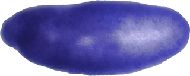
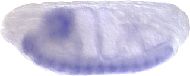
2-67
2-69.7
Please Note FlyBase no longer curates genomic clone accessions so this list may not be complete
Please Note This section lists cDNAs and ESTs that fall within the genomic extent of the gene model, which may include cDNAs and ESTs of genes within introns, or of overlapping genes. Please see JBrowse for alignment of the cDNAs and ESTs to the gene model.
For each fully sequenced cDNA the DGRC maintains various forms of the cDNA (e.g tagged or untagged) in several different host vectors for subsequent cloning and expression in Drosophila and Drosophila cell lines.
New stable cell line derived from S2-ThermoFischer : Stable S2 cell lines were created to study chromatin remodeling. The base S2[OsTir1] was created and selected core proteins from the four main sub-families of ATP-dependent chromatin remodelers (Snr1, Iswi, Ino80, and Chd1) as well as SWI/SNF component Brd7-9 were inserted to create S2OsTir1-Snr1-AID, S2OsTir1-Iswi-AID, S2OsTir1-Ino80-AID, S2OsTir1-Chd1-AID, and S2OsTir1-Brd7-AID for component depletion studies.
Iswi is not required for histone removal during spermatogenesis, but it is required for the stable incorporation of Mst77F and ProtA/ProtB into sperm chromatin. Iswi is not required for the recruitment of histone to the male pronucleus after fertilisation, but is required for the formation of an open chromatin structure after histone deposition.
DNA-protein interactions: genome-wide binding profile assayed for Iswi protein in S2 cells; GEO accession number GSE32404.
dsRNA has been made from templates generated with primers directed against this gene. RNAi of Iswi results in increased arborization of ddaD and ddaE neurons, defects in muscle, defects in dendrite morphogenesis and reproducible defects in da dendrite development.
Unilateral binding of Iswi protein to a model nucleosome correlates with directional movement of the nucleosome toward the enzyme.
The Iswi protein per se, out of the context of a multi subunit complex, is able to remodel nucleosomes, rearrange nucleosomal positions and function as a chromatin assembly factor.
ACF (ATP-utilizing chromatin assembly and remodeling factor) is a multisubunit factor consisting of 3 polypeptides. These are encoded by Iswi and by Acf1 (this encodes both 170 and 185kD subunits). The p47 polypeptide seen previously in ACF fractions (FBrf0095281) has been found to be identical to Yp2 and appears to have been a contaminant in these earlier ACF fractions.
The interaction between Iswi and nucleosomes is impaired by proteolytic removal of the N-terminal histone tails and by chemical crosslinking of nucleosomal histones.
Once nucleosome remodelling by the DNA binding factor is accomplished a high level of NURF activity is not continuously required for recruitment of the general transcription machinery and transcription initiation. NURF is able to assist gene activation in a chromatin context: remodel nucleosomes for gene activation in chromatin.
A chromatin-accessibility complex (CHRAC), which uses energy to increase the general accessibility of DNA in chromatin, has been identified. CHRAC can also function during chromatin assembly, using ATP to convert irregular chromatin into a regular array of nucleosomes with even spacing.
Nucleosome remodelling factor is composed of at least four polypeptides that act in concert with the Trl transcription factor at the Hsp70 promoter. Nucleosome remodelling factor acts directly on the nucleosome to perturb its structure.
Iswi encodes the 140kD subunit of Nucleosome remodeling factor.
Identified on the basis of similarity to Scer\snf2.
Source for merge of: Iswi anon-EP1279744.124
Source for merge of Iswi anon-EP1279744.124 was sequence comparison ( date:031211 ).


