BEAF, BEAF32, BEAF-32A, BEAF-32B, boundary element-associated factor





DNA-binding chromatin protein required for insulator function, and chromatin structure and dynamics and genome organization - required for oogenesis and zygotic development
Please see the JBrowse view of Dmel\BEAF-32 for information on other features
To submit a correction to a gene model please use the Contact FlyBase form
AlphaFold produces a per-residue confidence score (pLDDT) between 0 and 100. Some regions with low pLDDT may be unstructured in isolation.
Gene model reviewed during 5.44
Low-frequency RNA-Seq exon junction(s) not annotated.
Gene model reviewed during 5.50
1.205 (longest cDNA)
1.3 (longest cDNA)
The group(s) of polypeptides indicated below share identical sequence to each other.
282 (aa); 32 (kD predicted)
283 (aa); 40, 38 (kD observed); 32 (kD predicted)
Two BEAF-32 proteins differ in their amino-terminal sequences presumably as a result of alternative splicing at the 5' end of the gene. Heterocomplexes were found which contain both forms of BEAF-32 protein. The BEAF-32 proteins were shown to have C-terminal protein interaction domains and N-terminal DNA-binding domains.
Click to get a list of regulatory features (enhancers, TFBS, etc.) and gene disruptions (point mutations, indels, etc.) within or overlapping Dmel\BEAF-32 using the Feature Mapper tool.
The testis specificity index was calculated from modENCODE tissue expression data by Vedelek et al., 2018 to indicate the degree of testis enrichment compared to other tissues. Scores range from -2.52 (underrepresented) to 5.2 (very high testis bias).
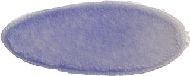
Comment: maternally deposited
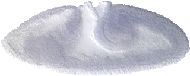
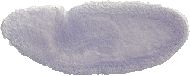
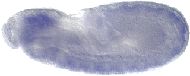
Comment: reported as procephalic ectoderm primordium
Comment: reported as procephalic ectoderm primordium
Comment: reported as procephalic ectoderm primordium
Comment: reported as procephalic ectoderm primordium
Comment: reported as procephalic ectoderm primordium
Comment: reported as procephalic ectoderm primordium
JBrowse - Visual display of RNA-Seq signals
View Dmel\BEAF-32 in JBrowse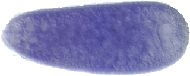
Please Note FlyBase no longer curates genomic clone accessions so this list may not be complete
Please Note This section lists cDNAs and ESTs that fall within the genomic extent of the gene model, which may include cDNAs and ESTs of genes within introns, or of overlapping genes. Please see JBrowse for alignment of the cDNAs and ESTs to the gene model.
For each fully sequenced cDNA the DGRC maintains various forms of the cDNA (e.g tagged or untagged) in several different host vectors for subsequent cloning and expression in Drosophila and Drosophila cell lines.
New stable cell line derived from S2-unspecified : S2 cells were stably transfected with BEAF-32 ::mCherry and su(Hw) ::EGFP.
DNA-protein interactions: genome-wide binding profile assayed for BEAF-32 protein in Kc167 cells; see Chromatin_types_NKI collection report. Individual protein-binding experiments listed under "Samples" at GEO_GSE22069 (http://www.ncbi.nlm.nih.gov/geo/query/acc.cgi?acc=GSE22069).
DNA-protein interactions: genome-wide binding profile assayed for BEAF-32 protein in 0-12 hr embryos; see Insulator_Class_I.mE01 collection report. Individual protein-binding experiments listed under "Samples" at GEO: 16245 (http://www.ncbi.nlm.nih.gov/geo/query/acc.cgi?acc=GSE16245).
BEAF-32 is required for the insulator activity of scs', but not for the scs or gypsy\su(Hw)BR insulators. BEAF-32 function also affects chromatin structure or dynamics.
The properties of two BEAF-32 protein isoforms, which differ in their amino termini, have been analysed.


