FB2025_04 , released October 2, 2025
Gene: Dmel\kay
Open Close
General Information
Symbol
Dmel\kay
Species
D. melanogaster
Name
kayak
Annotation Symbol
CG33956
Feature Type
FlyBase ID
FBgn0001297
Gene Model Status
Stock Availability
Gene Summary
kayak (kay) encodes a transcription factor involved in multiple biological processes including cell polarity, wound healing, germ cell and eye development and cell cycle. [Date last reviewed: 2019-03-14] (FlyBase Gene Snapshot)
Also Known As

Fos, Dfos, AP-1, D-Fos, c-Fos


Key Links
Genomic Location
Cytogenetic map
Sequence location
Recombination map
3-99
RefSeq locus
NT_033777 REGION:29765995..29794113
Sequence
Genomic Maps
Other Genome Views
The following external sites may use different assemblies or annotations than FlyBase.
Function
Gene Ontology (GO) Annotations (35 terms)
Molecular Function (8 terms)
Terms Based on Experimental Evidence (7 terms)
CV Term
Evidence
References
Terms Based on Predictions or Assertions (4 terms)
CV Term
Evidence
References
Biological Process (24 terms)
Terms Based on Experimental Evidence (22 terms)
CV Term
Evidence
References
inferred from mutant phenotype
involved_in dorsal closure
inferred from mutant phenotype
inferred from genetic interaction with FLYBASE:mir-1; FB:FBgn0262455
inferred from mutant phenotype
acts_upstream_of_positive_effect G2/M transition of mitotic cell cycle
inferred from mutant phenotype
involved_in locomotor rhythm
inferred from mutant phenotype
inferred from high throughput mutant phenotype
inferred from mutant phenotype
involved_in wound healing
inferred from mutant phenotype
Terms Based on Predictions or Assertions (2 terms)
CV Term
Evidence
References
Cellular Component (3 terms)
Terms Based on Experimental Evidence (3 terms)
CV Term
Evidence
References
located_in cytoplasm
inferred from direct assay
located_in nucleus
inferred from physical interaction with FLYBASE:Jra; FB:FBgn0001291
Terms Based on Predictions or Assertions (1 term)
CV Term
Evidence
References
is_active_in nucleus
inferred from biological aspect of ancestor with PANTHER:PTN001156258
Protein Family (UniProt)
Belongs to the bZIP family. Fos subfamily. (P21525A8MPH9)
Summaries
Gene Snapshot
kayak (kay) encodes a transcription factor involved in multiple biological processes including cell polarity, wound healing, germ cell and eye development and cell cycle. [Date last reviewed: 2019-03-14]
Gene Group (FlyBase)
BASIC LEUCINE ZIPPER TRANSCRIPTION FACTORS -
The basic leucine zipper (bZIP) transcription factors are sequence-specific DNA-binding proteins that regulate transcription. They are characterized by a 60-80 amino acid bZIP domain: a basic DNA binding domain followed by a leucine zipper dimerization domain. (Adapted from FBrf0152056).
Pathway (FlyBase)
IMD SIGNALING PATHWAY CORE COMPONENTS -
The immune deficiency (Imd) pathway primarily mediates the humoral immune response to Gram-negative bacteria. Activation of the Imd pathway by diaminopimelic acid-type peptidoglycan initiates a signaling cascade that ultimately results in the release of the NFκB-like factor Rel from auto-inhibition and its translocation into the nucleus to activate the transcription of antimicrobial peptides. (Adapted from FBrf0224587 and FBrf0238555.)
Protein Function (UniProtKB)
Developmentally regulated transcription factor AP-1 binds and recognizes the enhancer DNA sequence: 5'-TGA[CG]TCA-3'. May play a role in the function or determination of a particular subset of cells in the developing embryo. It is able to carry out its function either independently of or in conjunction with Jra.
(UniProt, P21525)
Developmentally regulated transcription factor AP-1 binds and recognizes the enhancer DNA sequence: 5'-TGA[CG]TCA-3'. May play a role in the function or determination of a particular subset of cells in the developing embryo. It is able to carry out its function either independently of or in conjunction with Jra.
(UniProt, A8MPH9)
Phenotypic Description (Red Book; Lindsley and Zimm 1992)
kay: kayak
Homozygous lethal; embryo open dorsally.
sro: shroud
Embryonic lethal. No differentiation of cuticle and mouthparts.
Summary (Interactive Fly)

transcription factor - basic leucine zipper - regulates dorsal closure - also required downstream from Decapentaplegic signaling for the regulation of labial in the midgut - Fos and Jun potentiate individual release sites and mobilize the reserve synaptic-vesicle pool at the Drosophila larval motor synapse

Gene Model and Products
Number of Transcripts
5
Number of Unique Polypeptides
5

Please see the JBrowse view of Dmel\kay for information on other features

To submit a correction to a gene model please use the Contact FlyBase form

Protein Domains (via Pfam)
Isoform displayed:
Pfam protein domains
InterPro name
classification
start
end
Protein Domains (via SMART)
Isoform displayed:
SMART protein domains
InterPro name
classification
start
end
Structure
Protein 3D structure   (Predicted by AlphaFold)   (AlphaFold entry P21525)

If you don't see a structure in the viewer, refresh your browser.
Model Confidence:
  • Very high (pLDDT > 90)
  • Confident (90 > pLDDT > 70)
  • Low (70 > pLDDT > 50)
  • Very low (pLDDT < 50)

AlphaFold produces a per-residue confidence score (pLDDT) between 0 and 100. Some regions with low pLDDT may be unstructured in isolation.

Experimentally Determined Structures
Crossreferences
Comments on Gene Model

Gene model reviewed during 5.55

Gene model reviewed during 5.39

Low-frequency RNA-Seq exon junction(s) not annotated.

Gene model reviewed during 5.49

Gene model reviewed during 5.56

Transcript Data
Annotated Transcripts
Name
FlyBase ID
RefSeq ID
Length (nt)
Assoc. CDS (aa)
FBtr0099989
3585
595
FBtr0099990
3194
546
FBtr0099988
4248
722
FBtr0290076
4574
755
FBtr0339165
3738
646
Additional Transcript Data and Comments
Reported size (kB)

3.65 (northern blot)

Comments
External Data
Crossreferences
Polypeptide Data
Annotated Polypeptides
Name
FlyBase ID
Predicted MW (kDa)
Length (aa)
Theoretical pI
UniProt
RefSeq ID
GenBank
FBpp0084844
62.8
595
5.62
FBpp0084846
57.5
546
6.32
FBpp0099941
78.3
722
7.22
FBpp0288515
80.6
755
6.77
Polypeptides with Identical Sequences

None of the polypeptides share 100% sequence identity.

Additional Polypeptide Data and Comments
Reported size (kDa)

595 (aa); 70 (kD observed)

Comments
External Data
Subunit Structure (UniProtKB)

Homodimer. Heterodimer with Jra. The kay-Jra heterodimer binds more stably to the AP-1 site than either of the two proteins alone.

(UniProt, P21525, A8MPH9)
Crossreferences
InterPro - A database of protein families, domains and functional sites
Linkouts
Sequences Consistent with the Gene Model
Mapped Features

Click to get a list of regulatory features (enhancers, TFBS, etc.) and gene disruptions (point mutations, indels, etc.) within or overlapping Dmel\kay using the Feature Mapper tool.

External Data
Crossreferences
Eukaryotic Promoter Database - A collection of databases of experimentally validated promoters for selected model organisms.
Linkouts
Expression Data
Testis-specificity index

The testis specificity index was calculated from modENCODE tissue expression data by Vedelek et al., 2018 to indicate the degree of testis enrichment compared to other tissues. Scores range from -2.52 (underrepresented) to 5.2 (very high testis bias).

-1.27

Transcript Expression
in situ
Stage
Tissue/Position (including subcellular localization)
Reference
head | restricted

Comment: reference states 4-8 hr AEL

northern blot
Stage
Tissue/Position (including subcellular localization)
Reference
RT-PCR
Stage
Tissue/Position (including subcellular localization)
Reference
organism

Comment: kay-RA and kay-RB transcripts

organism | faint

Comment: kay-RA and kay-RB transcripts

organism

Comment: kay-RA and kay-RB transcripts

ovary

Comment: kay-RA and kay-RB transcripts

Additional Descriptive Data

kay expression is generally consistent over this time period, with slight peaks at 6h and 24h APF.

kay transcripts are differentally expressed during oogenesis. kay-RA transcript is expressed in nurse cells from oogenesis stage 5 through stage 9. kay-RB transcription is first detected at oogenesis stage 9 in migrating columnar cells, with weak to no expression in anterior stretching cells posterior follicle cells. During early stage 10A kay-RB transcript levels decrease sharply and is transiently restricted to the anterior-most columnar cells before disappearing completely at mid-stage 10A. At early stage 10B, kay-RB transcript is strongly expressed in anterior stretched cells. From late stage 10B, kay-RB transcript accumulates to a high level in two rows of dorsal anterior follicle cells. During stage 13,kay-RB transcript is strongly expressed in a population of approximately 15 follicle cells located at the posterior pole of the oocyte. kay-RA transcript is uniformly distributed in preblastoderm embryos; this transcript is maternally deposited. kay-RB, by contrast, is not maternally deposited. Both kay transcripts are zygotically expressed at embryonic stage 4, in the amnioserosa anlage, and both continue to be expressed in the amnioserosa, and later in the embryonic leading edge cells. kay-RA is additionally expressed in the cephalic and posterior transverse furrows during gastrulation. kay-RB is additionally expressed in the stomodeal invagination, and in the cells that go on to form midgut constriction 1.

kay transcript is expressed strongly in salivary glands at the beginning of the prepupal ecdysone pulse (10 hr APF).

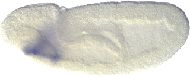
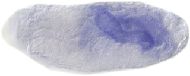
kay transcripts are detected at a low level on northern blots in 4-8hr embryos and at a higher level in 8-12 and 12-16hr embryos. kay expression was shown to be restricted to certain cell types by in situ hybridization. It is expressed in cells of the head that are thought to be mesodermal soon after gastrulation (4-5hr) and persists until 8hr of embryogenesis. Early expression is also observed in the dorsal ectoderm and the amnioserosa. After ~11hr of embryogenesis, expression is restricted to a subset of PNS cells. They localize near the lateral chordotonal organs and may be the es (extrasensory) or md (multiple dendritic) neurons. Later expression is also observed in the muscle attachment sites, midgut, hindgut, and anal pads.

Marker for
 
Subcellular Localization
CV Term
Polypeptide Expression
No Assay Recorded
Stage
Tissue/Position (including subcellular localization)
Reference
immunolocalization
Stage
Tissue/Position (including subcellular localization)
Reference
amnioserosa

Comment: weakly expressed in nucleus at this stage

Additional Descriptive Data

kay protein is expressed in stretch cells, floor cells and the first row of roof cells of the dorsal appendage primoridium.

kay protein is expressed in the same motor neurons that express the ScerGAL4C380 driver.

Marker for
 
Subcellular Localization
CV Term
Evidence
References
located_in cytoplasm
inferred from direct assay
located_in nucleus
inferred from physical interaction with FLYBASE:Jra; FB:FBgn0001291
Expression Deduced from Reporters
High-Throughput Expression Data
Associated Tools

JBrowse - Visual display of RNA-Seq signals

View Dmel\kay in JBrowse
RNA-Seq by Region - Search RNA-Seq expression levels by exon or genomic region
Reference
See Gelbart and Emmert, 2013 for analysis details and data files for all genes.
Developmental Proteome: Life Cycle
Developmental Proteome: Embryogenesis
External Data and Images
Linkouts
BDGP expression data - Patterns of gene expression in Drosophila embryogenesis
DRscDB - A single-cell RNA-seq resource for data mining and data comparison across species
EMBL-EBI Single Cell Expression Atlas - Single cell expression across species
FlyAtlas - Adult expression by tissue, using Affymetrix Dros2 array
FlyAtlas2 - A Drosophila melanogaster expression atlas with RNA-Seq, miRNA-Seq and sex-specific data
Fly-FISH - A database of Drosophila embryo and larvae mRNA localization patterns
Flygut - An atlas of the Drosophila adult midgut
Images
FlyExpress - Embryonic expression images (BDGP data)
  • Stages(s) 7-8
  • Stages(s) 9-10
  • Stages(s) 11-12
  • Stages(s) 13-16
Alleles, Insertions, Transgenic Constructs, and Aberrations
Classical and Insertion Alleles ( 27 )
For All Classical and Insertion Alleles Show
 
Other relevant insertions
Transgenic Constructs ( 40 )
For All Alleles Carried on Transgenic Constructs Show
Transgenic constructs containing/affecting coding region of kay
Transgenic constructs containing regulatory region of kay
Aberrations (Deficiencies and Duplications) ( 8 )
Variants
Variant Molecular Consequences
Alleles Representing Disease-Implicated Variants
Phenotypes
For more details about a specific phenotype click on the relevant allele symbol.
Lethality
Allele
Sterility
Allele
Other Phenotypes
Allele
Phenotype manifest in
Allele
nurse cell & nucleus | somatic clone
Orthologs
Human Orthologs (via DIOPT v9.1)
Species\Gene Symbol
Score
Best Score
Best Reverse Score
Alignment
Complementation?
Transgene?
Homo sapiens (Human) (34)
5 of 14
Yes
Yes
5 of 14
Yes
Yes
4 of 14
No
Yes
4 of 14
No
Yes
1  
2 of 14
No
No
2 of 14
No
No
1  
2 of 14
No
No
1  
2 of 14
No
No
2 of 14
No
No
2 of 14
No
No
2 of 14
No
No
2 of 14
No
No
1 of 14
No
No
1 of 14
No
No
1 of 14
No
Yes
1 of 14
No
Yes
1 of 14
No
No
1 of 14
No
No
3  
1 of 14
No
No
1  
1 of 14
No
No
1 of 14
No
No
1  
1 of 14
No
No
1 of 14
No
No
1 of 14
No
No
1 of 14
No
No
1 of 14
No
No
1 of 14
No
No
1  
1 of 14
No
No
1  
1 of 14
No
No
1 of 14
No
No
1  
1 of 14
No
No
1 of 14
No
No
1 of 14
No
No
1 of 14
No
No
1  
Model Organism Orthologs (via DIOPT v9.1)
Species\Gene Symbol
Score
Best Score
Best Reverse Score
Alignment
Complementation?
Transgene?
Rattus norvegicus (Norway rat) (23)
4 of 14
Yes
Yes
4 of 14
Yes
Yes
3 of 14
No
Yes
3 of 14
No
Yes
2 of 14
No
No
2 of 14
No
No
2 of 14
No
No
2 of 14
No
No
2 of 14
No
No
2 of 14
No
No
2 of 14
No
No
2 of 14
No
No
1 of 14
No
No
1 of 14
No
No
1 of 14
No
No
1 of 14
No
No
1 of 14
No
No
1 of 14
No
No
1 of 14
No
No
1 of 14
No
No
1 of 14
No
No
1 of 14
No
No
1 of 14
No
No
Mus musculus (laboratory mouse) (23)
5 of 14
Yes
Yes
5 of 14
Yes
Yes
4 of 14
No
Yes
4 of 14
No
Yes
2 of 14
No
No
2 of 14
No
No
2 of 14
No
No
2 of 14
No
No
2 of 14
No
No
2 of 14
No
No
1 of 14
No
No
1 of 14
No
No
1 of 14
No
No
1 of 14
No
No
1 of 14
No
No
1 of 14
No
No
1 of 14
No
No
1 of 14
No
No
1 of 14
No
No
1 of 14
No
No
1 of 14
No
No
1 of 14
No
No
1 of 14
No
No
1  
Xenopus tropicalis (Western clawed frog) (22)
4 of 13
Yes
Yes
3 of 13
No
Yes
3 of 13
No
Yes
2 of 13
No
No
1 of 13
No
No
1 of 13
No
No
1 of 13
No
No
1 of 13
No
No
1 of 13
No
No
1 of 13
No
No
1 of 13
No
No
1 of 13
No
No
1 of 13
No
No
1 of 13
No
No
1 of 13
No
No
1 of 13
No
No
1 of 13
No
No
1 of 13
No
No
1 of 13
No
No
1 of 13
No
No
1 of 13
No
No
1 of 13
No
No
Danio rerio (Zebrafish) (36)
6 of 14
Yes
Yes
6 of 14
Yes
Yes
6 of 14
Yes
Yes
5 of 14
No
Yes
5 of 14
No
Yes
4 of 14
No
Yes
4 of 14
No
Yes
3 of 14
No
No
3 of 14
No
No
3 of 14
No
No
2 of 14
No
No
2 of 14
No
Yes
2 of 14
No
No
2 of 14
No
No
2 of 14
No
No
2 of 14
No
No
2 of 14
No
No
1 of 14
No
No
1 of 14
No
No
1 of 14
No
No
1 of 14
No
No
1 of 14
No
No
1 of 14
No
No
1 of 14
No
No
1 of 14
No
Yes
1 of 14
No
No
1 of 14
No
No
1 of 14
No
No
1 of 14
No
No
1 of 14
No
No
1 of 14
No
No
1 of 14
No
No
1 of 14
No
No
1 of 14
No
No
1 of 14
No
No
Caenorhabditis elegans (Nematode, roundworm) (6)
4 of 14
Yes
Yes
1 of 14
No
No
1 of 14
No
No
1 of 14
No
No
1 of 14
No
No
1 of 14
No
Yes
Anopheles gambiae (African malaria mosquito) (10)
8 of 12
Yes
Yes
Arabidopsis thaliana (thale-cress) (17)
1 of 13
Yes
Yes
1 of 13
Yes
Yes
1 of 13
Yes
Yes
1 of 13
Yes
Yes
1 of 13
Yes
Yes
1 of 13
Yes
Yes
1 of 13
Yes
Yes
1 of 13
Yes
No
1 of 13
Yes
Yes
1 of 13
Yes
Yes
1 of 13
Yes
Yes
1 of 13
Yes
Yes
1 of 13
Yes
Yes
1 of 13
Yes
Yes
1 of 13
Yes
Yes
1 of 13
Yes
No
1 of 13
Yes
No
Saccharomyces cerevisiae (Brewer's yeast) (3)
2 of 13
Yes
Yes
1 of 13
No
Yes
1 of 13
No
No
Schizosaccharomyces pombe (Fission yeast) (4)
2 of 12
Yes
No
2 of 12
Yes
Yes
1 of 12
No
No
1 of 12
No
Yes
Escherichia coli (enterobacterium) (0)
Other Organism Orthologs (via OrthoDB)
Data provided directly from OrthoDB:kay. Refer to their site for version information.
Paralogs
Paralogs (via DIOPT v9.1)
Drosophila melanogaster (Fruit fly) (10)
3 of 13
1 of 13
1 of 13
1 of 13
1 of 13
1 of 13
1 of 13
1 of 13
1 of 13
1 of 13
Human Disease Associations
FlyBase Human Disease Model Reports
    Disease Ontology (DO) Annotations
    Models Based on Experimental Evidence ( 0 )
    Allele
    Disease
    Evidence
    References
    Potential Models Based on Orthology ( 0 )
    Human Ortholog
    Disease
    Evidence
    References
    Modifiers Based on Experimental Evidence ( 8 )
    Disease Associations of Human Orthologs (via DIOPT v9.1 and OMIM)
    Note that ortholog calls supported by only 1 or 2 algorithms (DIOPT score < 3) are not shown.
    Functional Complementation Data
    Functional complementation data is computed by FlyBase using a combination of the orthology data obtained from DIOPT and OrthoDB and the allele-level genetic interaction data curated from the literature.
    Interactions
    Summary of Physical Interactions
    Interaction Browsers

    Please see the Physical Interaction reports below for full details
    RNA-RNA
    Physical Interaction
    Assay
    References
    RNA-protein
    Physical Interaction
    Assay
    References
    protein-protein
    Physical Interaction
    Assay
    References
    Summary of Genetic Interactions
    Interaction Browsers

    Please look at the allele data for full details of the genetic interactions
    Starting gene(s)
    Interaction type
    Interacting gene(s)
    Reference
    Starting gene(s)
    Interaction type
    Interacting gene(s)
    Reference
    External Data
    Subunit Structure (UniProtKB)
    Homodimer. Heterodimer with Jra. The kay-Jra heterodimer binds more stably to the AP-1 site than either of the two proteins alone.
    (UniProt, P21525, A8MPH9 )
    Linkouts
    BioGRID - A database of protein and genetic interactions.
    DroID - A comprehensive database of gene and protein interactions.
    MIST (genetic) - An integrated Molecular Interaction Database
    MIST (protein-protein) - An integrated Molecular Interaction Database
    Pathways
    Signaling Pathways (FlyBase)
    Metabolic Pathways
    FlyBase
    External Links
    External Data
    Class of Gene
    Genomic Location and Detailed Mapping Data
    Chromosome (arm)
    3R
    Recombination map
    3-99
    Cytogenetic map
    Sequence location
    FlyBase Computed Cytological Location
    Cytogenetic map
    Evidence for location
    99B10-99C1
    Limits computationally determined from genome sequence between P{PZ}l(3)0674306743 and P{PZ}ncd05884
    Experimentally Determined Cytological Location
    Cytogenetic map
    Notes
    References
    99B7-99B11
    (determined by in situ hybridisation)
    99B9-99B10
    (determined by in situ hybridisation)
    Experimentally Determined Recombination Data
    Left of (cM)
    Right of (cM)
    Notes
    Stocks and Reagents
    Stocks (46)
    Genomic Clones (31)
    cDNA Clones (123)
     

    Please Note This section lists cDNAs and ESTs that fall within the genomic extent of the gene model, which may include cDNAs and ESTs of genes within introns, or of overlapping genes. Please see JBrowse for alignment of the cDNAs and ESTs to the gene model.

    cDNA clones, fully sequenced
    BDGP DGC clones
    Other clones
    Drosophila Genomics Resource Center cDNA clones

    For each fully sequenced cDNA the DGRC maintains various forms of the cDNA (e.g tagged or untagged) in several different host vectors for subsequent cloning and expression in Drosophila and Drosophila cell lines.

    cDNA Clones, End Sequenced (ESTs)
    RNAi and Array Information
    Linkouts
    DRSC - Results frm RNAi screens
    Antibody Information
    Laboratory Generated Antibodies
    Commercially Available Antibodies
     
    Cell Line Information
    Publicly Available Cell Lines
     
      Other Stable Cell Lines
       
        Other Comments

        The kay α isoform acts as a transcriptional regulator of circadian rhythms. It appears to modulate both circadian feedback loops, with results suggesting it acts as a repressor of the Clk/cyc transactivation complex and as an inhibitor of vri-mediated repression. The kay α protein binds directly to the vri protein.

        The kay protein binds specifically to the promoter region of CycB.

        RNAi screen using dsRNA made from templates generated with primers directed against this gene causes a specific decrease in AttA activity in response to heat-killed E.coli when assayed in S2 cells.

        RNAi generated by PCR using primers directed to this gene causes a cell growth and viability phenotype when assayed in Kc167 and S2R+ cells.

        kay is required for wound healing.

        kay is necessary for the proper posteriorward migration of the main body follicle cells during stage 9 of oogenesis. It also controls, from stage 11 onwards, the morphogenetic reorganisation of the follicle cells that are committed to secrete the dorsal appendages.

        kay function is required for its own upregulation.

        kay is required for thorax closure during metamorphosis.

        In vitro protein binding assays demonstrate kay is a poor candidate for a transcriptional activator acting through the Ubx cAMP response element (CRE).

        dpp, by inducing kay, broadly defines an endodermal region which thus becomes predisposed to express lab. kay cooperates with signal-activated response factors to confer the precise pattern of lab expression in the endoderm.

        Mutations in kay are described.

        kay is required for dorsal closure and elongation of cells in the lateral epidermis during embryogenesis.

        The DebA upstream region contains a binding site for the Jra/kay (AP-1) protein complex, which negatively regulates its transcription.

        The AP-1 complex encodes two proteins that have functional and structural properties in common with mammalian Fos and Jun proto-oncogene products; kay and Jra, respectively. The biochemical properties of the kay gene product have been examined in vitro and the expression pattern in developing embryos studied.

        kay lies within 12kb of ca.

        kay is a developmentally regulated transcription factor and its potential interplay with Jra may play an important role in cell-type specific transcription during embryonic development.

        Relationship to Other Genes
        Source for database merge of

        Source for merge of: kay CG15507

        Additional comments

        The sro (shroud) complementation group is not allelic to the kay gene (as stated in FBrf0157169) but instead corresponds to the CG12068 annotation; the sro1 and sroO4-105 alleles each have a nonsense mutation that disrupts the catalytic centre of the predicted CG12068 protein, the P{}sroP54 insertion which is inserted in the region upstream of kay causes a large reduction in the CG12068 transcript level as well as affecting kay and the lethality of the sro1 allele is rescued by overexpression of CG12068.

        Annotations CG15507 and CG15509 merged as CG33956 (which corresponds to kay) in release 4.2 of the genome annotation.

        FlyBase curator comment: The sro (shroud) complementation group is not allelic to the kay gene (as stated in FBrf0157169) but instead corresponds to the CG12068 annotation (see FBrf0210924).

        Nomenclature History
        Source for database identify of
        Nomenclature comments
        Etymology
        Synonyms and Secondary IDs (40)
        Reported As
        Symbol Synonym
        dlhD
        kay
        (Balakireva et al., 2024, Camilleri-Robles et al., 2024, Gera et al., 2024, Hersperger et al., 2024, Li et al., 2024, Li et al., 2024, Mitchell et al., 2024, Wang et al., 2024, Chen et al., 2023, Fisher et al., 2023, Floc'hlay et al., 2023, Muita and Baxter, 2023, Zane et al., 2023, Clarembaux-Badell et al., 2022, Ding et al., 2022, Gera et al., 2022, Havula et al., 2022, Jia et al., 2022, Okuda et al., 2022, Perlegos et al., 2022, Ullah et al., 2022, Vuong and Mlodzik, 2022, Wang et al., 2022, Bonfini et al., 2021, Fan et al., 2021, Liang et al., 2021, Mok and Choi, 2021, Takakura et al., 2021, Ullastres et al., 2021, Yu et al., 2021, Zhang et al., 2021, Cho et al., 2020, Feuillette et al., 2020, Huang et al., 2020, Krautz et al., 2020, Overton et al., 2020, Parniewska and Stocker, 2020, Rust et al., 2020, Adhikari et al., 2019, Awata et al., 2019, Banerjee et al., 2019, Chai et al., 2019, Chang et al., 2019, Hall et al., 2019, Herrera and Bach, 2019, Ho et al., 2019, Li et al., 2019, Meltzer et al., 2019, Ray et al., 2019, Schaub et al., 2019, Shokri et al., 2019, Toshniwal et al., 2019, Yang et al., 2019, Behrman et al., 2018, Bischof et al., 2018, Bushnell et al., 2018, Hall et al., 2018, Lavoy et al., 2018, Mecklenburg et al., 2018, Mondal et al., 2018, Tsai et al., 2018, Karaiskos et al., 2017, Katheder et al., 2017, Revaitis et al., 2017, Tian et al., 2017, Tokusumi et al., 2017, Transgenic RNAi Project members, 2017-, Zhou et al., 2017, Aggarwal et al., 2016, Carbone et al., 2016, Voelzmann et al., 2016, Willsey et al., 2016, Bornstein et al., 2015, Dembeck et al., 2015, Gene Disruption Project members, 2015-, Mosher et al., 2015, Nagarkar-Jaiswal et al., 2015, Schertel et al., 2015, Vedanayagam and Garrigan, 2015, Zhai et al., 2015, Beira et al., 2014, Faisal et al., 2014, Gonzalez et al., 2014, Guo et al., 2014, Bonke et al., 2013, Carter, 2013, Iyer et al., 2013, Külshammer and Uhlirova, 2013, Kwon et al., 2013, Saunders et al., 2013, Schertel et al., 2013, Telonis-Scott et al., 2013, Vaque et al., 2013, Wang et al., 2013, Hadar et al., 2012, Hainaut et al., 2012, Japanese National Institute of Genetics, 2012.5.21, Ling et al., 2012, Spokony and White, 2012.5.22, Weber et al., 2012, Abruzzi et al., 2011, Biteau and Jasper, 2011, Friedman et al., 2011, Weake et al., 2011, Zhang and Arnosti, 2011, Niwa et al., 2010, Dubruille et al., 2009, Massaro et al., 2009, Tokusumi et al., 2009, Grima et al., 2008, Hudson and Goldstein, 2008, Stofanko et al., 2008, Weber et al., 2008, Zhao et al., 2008, Zhou et al., 2008, Buszczak et al., 2007, Hudson et al., 2007, Hudson et al., 2007, Luo et al., 2007, Neuman-Silberberg, 2007, Valanne et al., 2007, Zeitlinger et al., 2007, Cerrato et al., 2006, Polaski et al., 2006, Zhang et al., 2006, Kim et al., 2005, Mace et al., 2005, Mace et al., 2005, Giesen et al., 2003, Souid and Yanicostas, 2003, Lehmann et al., 2002, Jurgens et al., 1984)
        Secondary FlyBase IDs
        • FBgn0053956
        • FBgn0000468
        • FBgn0000725
        • FBgn0003506
        • FBgn0039693
        • FBtr0085478
        • FBtr0085479
        • FBpp0084845
        • FBtr0085480
        Datasets (0)
        Study focus (0)
        Experimental Role
        Project
        Project Type
        Title
        Study result (0)
        Result
        Result Type
        Title
        External Crossreferences and Linkouts ( 84 )
        Sequence Crossreferences
        NCBI Gene - Gene integrates information from a wide range of species. A record may include nomenclature, Reference Sequences (RefSeqs), maps, pathways, variations, phenotypes, and links to genome-, phenotype-, and locus-specific resources worldwide.
        GenBank Nucleotide - A collection of sequences from several sources, including GenBank, RefSeq, TPA, and PDB.
        GenBank Protein - A collection of sequences from several sources, including translations from annotated coding regions in GenBank, RefSeq and TPA, as well as records from SwissProt, PIR, PRF, and PDB.
        RefSeq - A comprehensive, integrated, non-redundant, well-annotated set of reference sequences including genomic, transcript, and protein.
        UniProt/GCRP - The gene-centric reference proteome (GCRP) provides a 1:1 mapping between genes and UniProt accessions in which a single 'canonical' isoform represents the product(s) of each protein-coding gene.
        UniProt/Swiss-Prot - Manually annotated and reviewed records of protein sequence and functional information
        UniProt/TrEMBL - Automatically annotated and unreviewed records of protein sequence and functional information
        Other crossreferences
        AlphaFold DB - AlphaFold provides open access to protein structure predictions for the human proteome and other key proteins of interest, to accelerate scientific research.
        BDGP expression data - Patterns of gene expression in Drosophila embryogenesis
        DRscDB - A single-cell RNA-seq resource for data mining and data comparison across species
        EMBL-EBI Single Cell Expression Atlas - Single cell expression across species
        FlyAtlas2 - A Drosophila melanogaster expression atlas with RNA-Seq, miRNA-Seq and sex-specific data
        FlyMine - An integrated database for Drosophila genomics
        InterPro - A database of protein families, domains and functional sites
        KEGG Genes - Molecular building blocks of life in the genomic space.
        MARRVEL_MODEL - MARRVEL (model organism gene)
        Linkouts
        BioGRID - A database of protein and genetic interactions.
        Drosophila Genomics Resource Center - Drosophila Genomics Resource Center (DGRC) cDNA clones
        DroID - A comprehensive database of gene and protein interactions.
        DRSC - Results frm RNAi screens
        Eukaryotic Promoter Database - A collection of databases of experimentally validated promoters for selected model organisms.
        FlyAtlas - Adult expression by tissue, using Affymetrix Dros2 array
        FlyCyc Genes - Genes from a BioCyc PGDB for Dmel
        Fly-FISH - A database of Drosophila embryo and larvae mRNA localization patterns
        Flygut - An atlas of the Drosophila adult midgut
        iBeetle-Base - RNAi phenotypes in the red flour beetle (Tribolium castaneum)
        Interactive Fly - A cyberspace guide to Drosophila development and metazoan evolution
        KEGG Pathways - A collection of manually drawn pathway maps representing knowledge of molecular interaction, reaction and relation networks.
        MIST (genetic) - An integrated Molecular Interaction Database
        MIST (protein-protein) - An integrated Molecular Interaction Database
        References (515)